 28Sep
28Sep
Top Diwali Destinations in India: Ayodhya, Varanasi and More
If you are planning to experience Diwali in India, the first decision is not simply where the biggest celebration takes…
Read Article
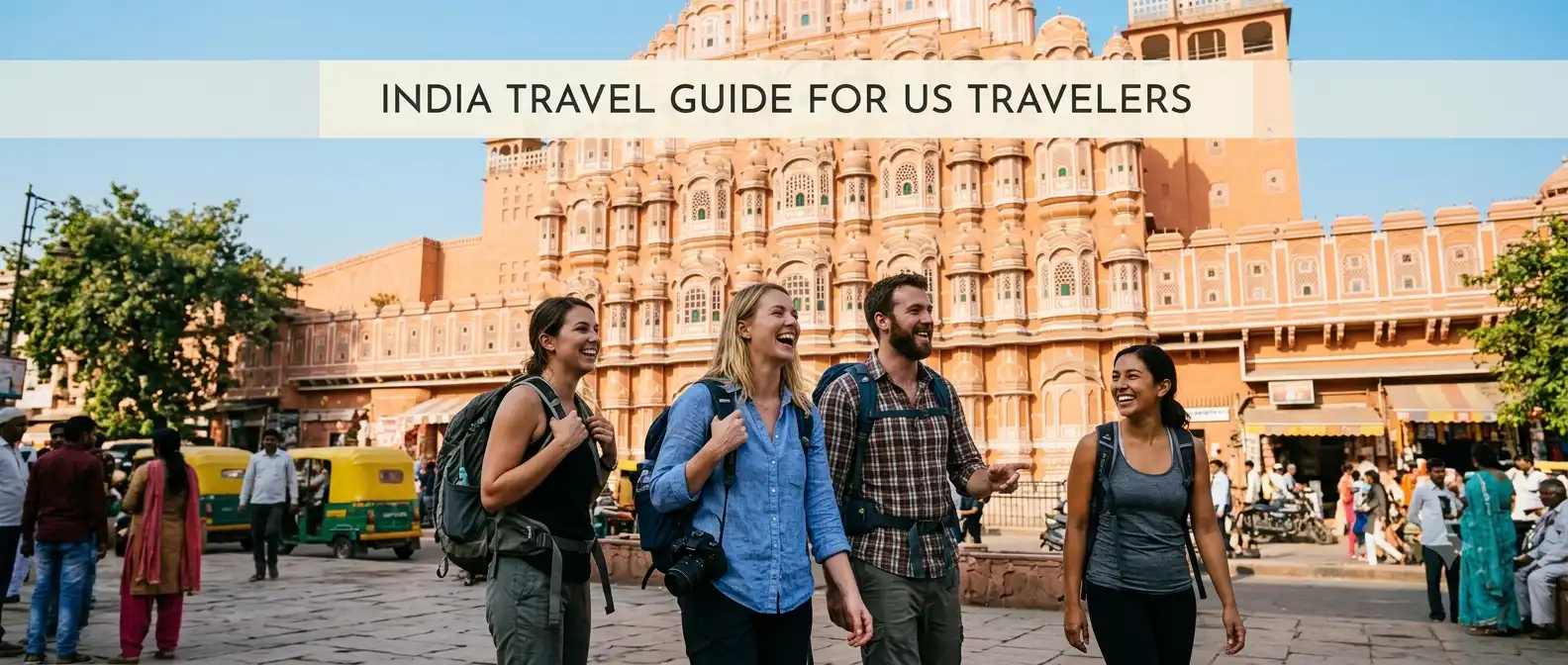
If you have never been to India before, you may be wondering what you are getting into.
Maybe you have seen the traffic of Delhi. Perhaps you’ve heard stories about tourist scams. Or perhaps you’ve just never been anywhere as different from the United States as India may be.
So, is India safe for American tourists?
The short answer
India can be a wonderful destination for American travelers, but it is not without risk. As of now, the U.S. Department of State has India at Level 2: Exercise Increased Caution due to crime and terrorism, with some locations under increased risk or limitations.
For a visitor to the Golden Triangle-Delhi, Agra, and Jaipur-the logical approach is not to fret about every possible scenario.
Instead, recognize the practical hazards, schedule crucial transit in advance, secure your things, respect local customs, and leave some flexibility in your itinerary.
Doing this can make that first vacation a whole lot simpler.
Important: Travel advisory and local conditions are subject to change. Check the latest guidance from your own government before you travel and while you are on your journey.
India is not an entirely risk-free destination, but it is a well-established international tourism destination.
The more useful question is not just “Is India safe?”
“What do I need to know before I go, and how can I make smart decisions once I’m there?”
Getting ready for a vacation to the Golden Triangle often comes down to several basic habits:
For the first-time tourist, India might be a great sensory shock. If you give yourself time to get comfortable, it can make the experience much more enjoyable.
The conventional itinerary of the Golden Triangle in North India is:
Delhi → Agra → Jaipur
It’s particularly popular with first-time tourists, as the three places offer extremely diverse experiences without having to travel across the whole country.
| Destination | What you will encounter | How it might feel different |
| Delhi | Historic landmarks, markets, food and modern city life | Size and crowds and crowds |
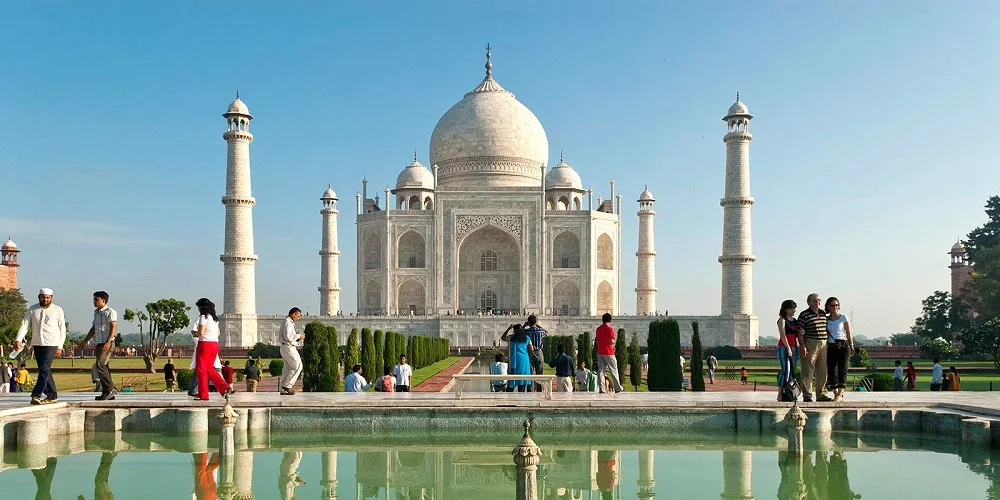
| Agra | Agra Fort, Taj Mahal & History of Mughals | Busy tourist spots and early beginnings |
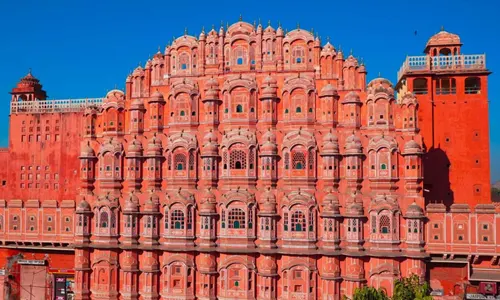
| Jaipur | Forts, castles, markets and the Rajasthani culture | Traffic and crowded bazaars, heat |
The three cities are not interchangeable.
Delhi can be fierce.
Agra is primarily focused on its big attractions.
Jaipur offers a different pace, with forts, palaces, markets, and the opportunity to sample Rajasthani culture.
A decent itinerary should take into account those differences.
→ Golden triangle tour packages
The first thing that American tourists notice about Delhi is just how much is going on around them—it is a vast multinational city.
Traffic is heavy. Streets can be busy. Markets are crazy. There’s a lot to absorb.
That doesn’t mean you should stay away from the city.
This implies you need to arrange your first day wisely.
“What do you do when you reach Delhi?”
If you’re coming from the United States after a lengthy flight, book your airport transfer before you leave home.
Keep these details on your phone:
You don’t have to be there at 8pm. and to go sightseeing straight off.
Check in. Have a bite. Sleep.
After you’ve had time to adjust, begin your exploration.
A scene of a practical arrival.
Imagine you have just got off a long flight from the US and landed in Delhi.
You’re fatigued, you’re carrying bags, and your phone may still be connecting to a local network.
This is not the time to start comparing cab rates or trying to figure out a new way to your hotel.
Having your airport transfer sorted before you arrive takes one less decision from the evening.
That little amount of prep might make those first few hours seem a lot easier.
In the busy areas of Delhi
The UK Foreign, Commonwealth & Development Office cautions against rallies, demonstrations, and mass gatherings and to follow the advice of the local authorities.
Agra is visited by people from all over the world every day, mostly because of the Taj Mahal.
The primary practical concerns for first-time visitors are usually the crowds in tourist places, transport, and uninvited advances, rather than the need to avoid Agra altogether.
A simple rule works well: you don’t have to take every offer that comes your way.
They can offer to take you somewhere, sell you something, or show you a “special” shop.
You can just say, “No, thank you.” And keep walking.
You don’t have to argue.
Don’t hurry Agra for a photo stop
If the Taj Mahal is one of the main reasons you’re visiting India, then perhaps you might consider spending a nite in Agra rather than treating the city as a quick stop between Delhi and Jaipur.
Depending on the season and current visitation arrangements, an early visit can also provide for a more comfortable encounter.
The car’s waiting, so you’ll have more time to truly gaze at the monument, not check your watch.
Jaipur is the third angle of the Golden Triangle and is one of the most famous tourist sites in India.
The same basic precautions hold:
The city is worth visiting other than the big forts and palaces.
Allow yourself time for a leisurely supper, a market, a craft experience, or just sitting someplace and watching the city go by.
Those calmer moments often make the journey unforgettable.
There is no such thing as a “India safety issue.” There are some practical things to know.
1. Road and Transport Safety
Indian traffic is one of the biggest culture shocks for many Americans.
The roadways may seem a lot more chaotic than what you are used to at home.
Therefore, road safety needs must be taken seriously when organizing a Golden Triangle tour.
If you are driving between Delhi, Agra, and Jaipur, get a good vehicle and an experienced driver.
Price isn’t the only thing to consider while choosing transportation.
India has a high rate of road accidents, and the UK FCDO urges travelers to drive a well-maintained vehicle and take particular caution around roads and traffic.
2. Crowded areas
The FCDO also warns travelers to be careful of their belongings on public transit and amid crowds and to be vigilant in tourist locations where frauds, pickpocketing, and ticket touts might occur.
3. Scams and free offers for tourists
Tourist frauds are rampant in renowned destinations across the world, and India is no exception.
The easiest approach to avoid many problems is to make critical preparations before you need to.
It’s simpler to spot something out of the ordinary when you know what’s already there.
For many first-timers, the Golden Triangle is easier to go around in private transport.
It doesn’t eradicate all road hazards. But it can alleviate some of the uncertainty of constantly organizing transport in unknown cities.
Instead of flying into Delhi and perpetually wondering “How do I get there? You already have a set route, and you know the driver.
Private Golden Triangle Tour/Independent Travel
| Travel on Your Own | Private Tour to Golden Triangle | |
| Flexibility | High | High |
| Planning needed | High | Lower |
| Transportation | Self-arranged | Pre-arranged |
| Community support | It’s your choice | Available with your travel operator |
| Ease for the first time | Moderate | High |
| Ability to change pace | Depends on the booking | Usually easier. |
For experienced travelers, autonomous travel can be just the ticket.
“A private itinerary can just take some of the friction out of a first-time visit.”
→ Private Golden Triangle Tour
There’s no one perfect method to tour India; every traveler is different.
Lighten Up Your First Day Out
It’s a long-length trip and then a packed schedule of sightseeing. It’s tiring. Allow yourself time to get there.
Decide how to deal with transportation
Don’t leave your airport arrival or large intercity transfers to the last minute.
Consider your rate of travel
Five days and seven days are totally different experiences. If you can afford the luxury of extra time, a slower itinerary generally feels less stressful.
→ 5-Day Golden Triangle Tour
→ 7 Days Golden Triangle Tour
Find out what your tour includes
A headline price may seem cheap until you find how many extras have been left out.
There is no need to fear Indian food. You have to be sensible about what you eat and drink.
The CDC encourages travelers to India to be careful about food and water safety and offers tips on safe food and drinks, polluted water, and travel health preparedness.
And then, have a nice meal.
Sample local delicacies. Ask your guide about the specialties of the region.
You didn’t fly halfway around the world to eat the same things you could get back home.
Women who are traveling alone should take extra measures.
The U.S. Department of State presently warns Americans, especially women, against traveling alone and suggests revisiting its recommendations for women travelers.
A private itinerary can be a great middle ground if you want to be independent but you don’t want to make all the travel and logistics decisions yourself.
You still get your own journey. You have local support when you need it.
In India, there is no need to carry a significant amount of cash about.
A good rule of thumb is to carry enough to last you the day while keeping your major cards and backup cash protected.
You may also discover that little purchases, tips, and local services entail amounts that feel very different once you convert from U.S. dollars.
You don’t want to be thinking about every little expense on your getaway. Budget correctly. Know what your tour includes. Then enjoy yourself.
Save emergency info before you get there.
The 112 emergency system, run by the Indian government, is the national emergency number for immediate police, fire, and medical help. It is available in all states and union territories of India.
The Ministry of Tourism has also set up a 24/7 multi-lingual tourist helpline at 1800-11-1363.
If you are a U.S. citizen, have the contact information for the U.S. Embassy or nearest consular office with your travel documents.
The U.S. Department of State also encourages signing up for the Smart Traveler Enrollment Program (STEP) so travelers can receive alerts and make it easier for the U.S. government to reach them or their emergency contact in case of an emergency.
save them before you go
It only takes a few minutes. Do it if you don’t need it.
There’s no need for a convoluted rulebook. Begin here.
Don’t ignore official travel advice
Before you travel, check with your own government for the latest guidance. Start with the U.S. for Americans. Travel Advisory for India – Department of State. It now ranks India as Level 2: Exercise Increased Caution.”
Avoid joining protesters
Avoid protests and big groups of people, especially if you don’t know what’s going on. The UK FCDO advises against attending demonstrations, rallies, and large gatherings and to follow the recommendations of local authorities.
Don’t show pricey items
Most of the time you don’t need to stand out.
Don’t take up every unsolicited offer.
Just a simple “No, thanks” is OK.
Don’t only go for the cheapest transport
Reliability is required for critical transactions.
Don’t underestimate the weather.
Sightseeing can be tiring, with the heat not making a nice day. Plan outside activities according to the season. Drink enough fluids.
Don’t Overpack Your Itinerary
holiday you’re in. Leave some room to breathe.”
Travel without the right insurance? Don’t.
The U.S. Department of State encourages travel insurance and urges travelers to select a policy that provides coverage for medical care, evacuation, and trip cancellation.
→ Best Time to visit Golden Triangle
Say this is your first trip to India.
You have flown into New York, Chicago, Los Angeles, or another US city.
You arrive in Delhi exhausted and a little daunted
Option A: Figure it out when you land
Option B: Have the critical bits ready by the time you get there
The next morning you can go sightseeing without having to solve five logistical problems first.
Neither way is right for everyone all the time.
But if this is your first time in India, taking away a few unknowns can make a major difference.
That’s one reason why private Golden Triangle trips can appeal to first-time international tourists.
Technically you can see Delhi, Agra, and Jaipur in a few days. That doesn’t mean that you should rush it.
5 days
Perfect for the short-term vacationers. It’s going to be a little fast-paced.
6–7 days
More comfortable choice for many first-time guests. You have more room to sightsee, eat, rest, and for unexpected moments.
More than 7 days
Instead of merely filling every day with additional sightseeing, consider adding another experience.
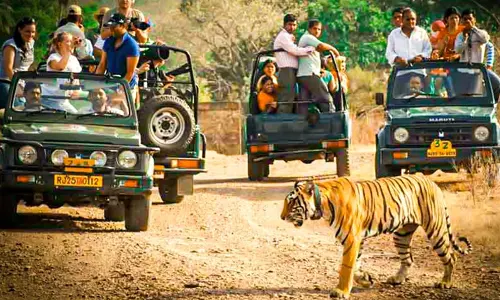
→ Golden Triangle with Ranthambore
→ Golden Triangle with Udaipur
The perfect itinerary relies on your interests, arrival time, leaving city, and how fast you prefer to go.
→ Golden Triangle Guide for First-Time Visitors
The most common mistake is not usually picking the “wrong” monument. It’s attempting to do too much.
A first-time visitor will look at a map and think, “Delhi, Agra, and Jaipur aren’t that far apart.”
On paper it can look straightforward.
In fact, it takes time for road conditions, traffic, time for sightseeing, hotel check-ins, and meals.
So schedule your itinerary based on how you will really feel, not how many sights you can possibly squeeze into a day.
A good Golden Triangle vacation should make you want to see what tomorrow brings. I don’t want a day off badly.
This is essential, as India is a very big country.
A travel caution for one part of the country doesn’t mean every tourist spot in India has the same danger.
The U.S. now has India on Level 2: Exercise Increased Caution, with additional cautions for some places.
The UK FCDO also issues particular geographic advisories, for example, advising against travel to portions of the India-Pakistan border area and Jammu and Kashmir.
If you are only travelling to Delhi, Agra, and Jaipur, check the latest advice for those destinations and your planned route.
Don’t use an old blog post created for a different year.
Travel advice may change.
Sure, for some travelers, yes.
Not because India cannot be explored individually. It can do.
The question is how much of the planning you want to do yourself.
If you wish to do a private Golden Triangle itinerary, it can be sensible to
For a first-time visitor to India, that can be worth paying for.
The secret is to look at the actual inclusions of the different excursions and not just pick the one with the cheapest advertised price.
→ See Golden Triangle Tour Packages
That last factor is easy to overlook.
Some of the best vacation memories aren’t the ones you planned.
If you’ve never been to India before, the first few hours can be a bit of an assault.
Delhi is a noisy city.
Traffic is full of surprises.
The crowds are a little different to adapt to.
Someone might try to sell you something you didn’t ask for.
And you can be at a crowded crossing and wonder how everybody else appears to know just when to move.
Then something shifts.
You’re starting to get the beat.
You learn which proposals to disregard.
You get comfortable in your environment.
You sit down to a meal and you find you are enjoying it.
If you arrive in Jaipur, India may seem extremely different from what you expected before you came.
Well, that’s what excellent planning is for.
It’s not about making India feel like home.
It’s about understanding enough before you go so you can really enjoy India for what it is.
If this is your first visit to India and you want the big logistics to be taken care of by the time you get there, look at our 5- to 7-day Golden Triangle trips, or ask about a personalized itinerary customized to your dates, interests, and speed.
You don’t have to go for the most packed itinerary.
You don’t have to watch it all.
You just need a way that feels right for you.
Official Travel Information
Before you depart, verify the latest official recommendations for your nationality and travel plans:
Quick answers related to this article.
India is not without risk and the U.S. The Department of State warns U.S. citizens to exercise heightened caution due to crime and terrorism. Travelers should verify the current alert, understand geographical limits, and take appropriate precautions with transit, goods, crowds, and personal safety.
Delhi, Agra, and Jaipur are established tourist attractions visited routinely by foreign tourists. Visitors should continue to take the usual precautions, particularly in the vicinity of crowds, transport facilities, personal items, and unsolicited offers. Always verify current official travel advice before you leave.
Either choice will work. You have greater control with independent travel, but you will have to arrange your own transportation and logistics. For first-time tourists, a personalized Golden Triangle tour can be more comfortable as airport transfers, intercity transport, and local support can be organized in advance.
Delhi is a huge international metropolis, yet as a first-time visitor, it can be overwhelming with its size, traffic, and congestion. Ensure reliable airport travel, be mindful in congested areas, and avoid unfamiliar transport options or demonstrations.
Agra is one of the most frequented tourist spots in India. Visitors should use prudent precautions in popular tourist locations, keep their belongings secure, and beware of unwanted offers of shopping, advice, or transport.
Jaipur is a favorite location for international visitors. Travelers should use dependable transportation, exercise caution in crowded markets, avoid secluded locations after dark, and respect local norms when visiting religious and cultural sites.
Five days can suffice for travelers with limited vacation time, but six or seven days usually permits a more relaxed pace. A lengthier journey also allows you to include destinations such as Ranthambore or Udaipur without making the itinerary unduly rushed.
Expect changes in traffic, crowds, climate, food, transportation, and everyday routines for first-time tourists. Book key transfers ahead of time, retain digital copies of your documents, take prudent food and water precautions, and build in some flexibility to your itinerary.
Women travelling alone need to be more careful. The U.S. State Department has issued a specific warning to women travelers to be careful in India and now warns Americans not to travel alone, particularly ladies.
112 is the national emergency number in India. It is available in all states and union territories of India and can be utilized for emergency police, fire, and medical assistance.
Yes. The Ministry of Tourism of India has a 24/7 multi-lingual tourist helpline at 1800-11-1363.
U.S. citizens can also enroll for free in the Smart Traveller Enrolment Program (STEP) through the Department of State. It offers travel notifications and can enable the U.S. government to reach travelers or their emergency contacts in an emergency.
Getting travel insurance for an international vacation is a good idea. Depending on the policy, it can aid with unforeseen medical expenditures, evacuation, travel cancellation, and other inconveniences. Travelers should read their policies carefully before buying.
It can be at first. Delhi's vastness, traffic, congestion, noise, and foreign routines may take some getting used to. Pre-arranged transportation and local help and a slower itinerary can achieve simpler first several days. Most essential: don’t try to see everything at once; give yourself time to relax into the rhythm of the journey.
28Sep
If you are planning to experience Diwali in India, the first decision is not simply where the biggest celebration takes…
Read Article 23Sep
23Sep
If you have seen photographs of Pushkar during camel fair season, you may already have an idea of what to…
Read Article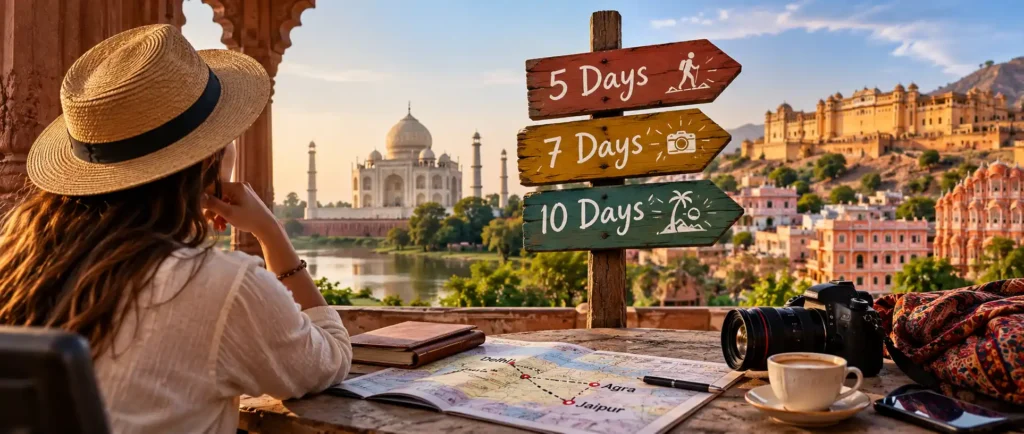 21Sep
21Sep
Planning a Golden Triangle trip and wondering whether you need 5, 7 or 10 days?The short answer is: 5 days…
Read Article