How Many Days Do You Need for the Golden Triangle? 5, 7 or 10 Days?

- 5 days works if you want the main highlights and are comfortable with a fairly active schedule.
- 7 days gives you more breathing room for Delhi, Agra and Jaipur without making every day feel tightly packed.
- 10 days makes sense if you want a slower Golden Triangle trip or want to add another destination such as Ranthambore, Udaipur or another part of Rajasthan.
The number of days matters, but there is another detail travellers often miss: a calendar day is not always a sightseeing day.
An international arrival, hotel check-in, road transfer, early Taj Mahal visit or departure flight can use a large part of your day. That is why two travellers can both book a “5-day Golden Triangle tour” and have very different experiences.
For a practical starting point, you can also compare the current Golden Triangle tour packages available from GTT Experts.
Written by Jitendra Singh, Co-Founder, GTT Experts
Jaipur-based Golden Triangle travel specialist with 12+ years of experience planning private India journeys.
Quick Answer: 5 vs 7 vs 10 Days
| Trip length | What you can realistically cover | Travel pace | Best suited to |
|---|---|---|---|
| 5 days | Delhi, Agra and Jaipur highlights | Active | Travellers with limited holiday time |
| 7 days | Delhi, Agra and Jaipur with more flexibility | Moderate | First-time visitors wanting a less rushed trip |
| 10 days | Golden Triangle at a slower pace + an extension | Relaxed | Travellers wanting Rajasthan, wildlife or extra experiences |
There is no single number that works for everyone.
If your priority is simply seeing the Taj Mahal, Agra Fort, Jaipur’s major forts and palaces, and Delhi’s key sights, five days can work.
If you are travelling to India for the first time and don’t want every transfer or sightseeing day to feel scheduled from morning until evening, seven days gives you more room.
Ten days becomes more interesting when you stop treating the Golden Triangle as three cities to tick off and start using it as the beginning of a wider India itinerary.
Why Golden Triangle Takes More Time Than the Map Suggests
Delhi, Agra and Jaipur look relatively straightforward on a map.
The practical reality is different.
Your usable sightseeing time is affected by:
- Your international arrival time
- Airport transfers
- Hotel check-in and check-out
- Road traffic
- The timing of major monuments
- Early-morning visits
- Meal breaks
- Travel between cities
- Your departure flight
- How much time you need to rest
A useful way to plan the trip is what we call the Golden Triangle Usable-Days Rule:
Calendar days − arrival/departure time − transfer time − fixed sightseeing constraints = usable sightseeing time
This is not a formal tourism formula. It is simply a practical way to avoid overestimating how much you can see.
For example, if your flight reaches Delhi at 8:00 pm, that is technically Day 1 of a five-day trip. In practical terms, it is probably an arrival and hotel night rather than a full sightseeing day.
A Real Planning Lesson from the Road
One of the first things we look at when planning a private Golden Triangle itinerary is not just the number of days. We look at where the usable hours actually fall.
That can change the whole order of the trip.
A traveller arriving late in Delhi may be better off starting sightseeing the next morning rather than trying to force an attraction into the arrival evening.
Likewise, if the Taj Mahal is a priority, the day of the week matters. The official Taj Mahal website states that the monument is closed to general visitors every Friday and normally opens 30 minutes before sunrise and closes 30 minutes before sunset.
How Many Days Should You Spend in Delhi, Agra, Jaipur?
There is no mandatory formula, but a useful starting point is:
- Delhi: 1–2 days
- Agra: 1–2 days
- Jaipur: 2–3 days
That does not mean you need five to seven full sightseeing days before travelling between cities. It means these are useful amounts of time to consider when deciding how much depth you want in each destination.
Delhi: 1 or 2 Days
One full sightseeing day can cover many of Delhi’s major highlights if the itinerary is organised carefully.
You could include places such as:
- Red Fort
- Jama Masjid
- Chandni Chowk
- India Gate
- Humayun’s Tomb
- Qutub Minar
Two days makes sense if you want to slow the pace, explore Old Delhi properly, add more monuments, or recover from an international flight before moving on.
Agra: 1 or 2 Days
For many travellers, one night in Agra is enough.
The Taj Mahal is the obvious priority, but Agra Fort deserves proper time too.
A second night can make sense if you want to add places such as:
- Mehtab Bagh
- Itmad-ud-Daulah
- Akbar’s Tomb
- Fatehpur Sikri
- More time for local crafts or food
If the Taj Mahal is the main reason for your Agra visit, plan its timing before filling the rest of the day.
Jaipur: 2 or 3 Days
Jaipur is where adding an extra day can noticeably change the feel of the trip.
The major sights include:
- Amber Fort
- City Palace
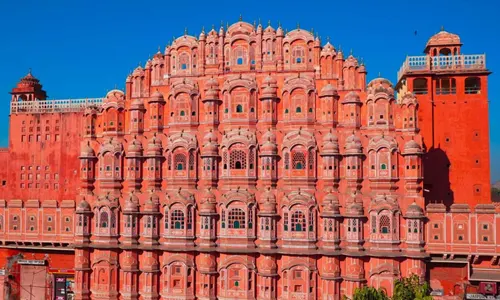
- Hawa Mahal
- Jantar Mantar
- Jal Mahal
- Jaipur’s old city and markets
One full day can cover the major monuments.
Two full days gives you more room for markets, local food, crafts, photography and simply enjoying the city.
GTT Experts is based in Jaipur, so this is also the city where our team has its strongest local connection.
For destination planning, see the Jaipur tours and sightseeing guide.
Is 5 Days Enough?
Yes, five days can be enough for the Golden Triangle if your goal is the major highlights and you are comfortable with an active itinerary.
The important part is understanding what five days actually means.
A five-day trip often includes arrival, transfers and departure within those five calendar days. You therefore need to use the sightseeing hours carefully.
A Practical 5-Day Structure
Day 1 — Arrive in Delhi
- Airport pickup
- Hotel check-in
- Rest after the international flight
- Optional light evening activity if arrival time allows
Day 2 — Delhi sightseeing → Agra
- Major Delhi highlights
- Old Delhi or New Delhi depending on interests
- Drive to Agra
- Hotel check-in
Day 3 — Taj Mahal → Agra Fort → Jaipur
- Early Taj Mahal visit
- Agra Fort
- Drive towards Jaipur
- Optional stop at Fatehpur Sikri or another suitable point depending on the route
- Arrive Jaipur
Day 4 — Jaipur sightseeing
- Amber Fort
- City Palace
- Hawa Mahal
- Jantar Mantar
- Selected market or local experience
Day 5 — Jaipur → Delhi / departure
Drive to Delhi if your international flight departs from Delhi. Allow a substantial buffer for the road journey and airport formalities.
This is close to the structure used by GTT Experts’ existing 5 Days Golden Triangle Tour.
Who Should Choose 5 Days?
Five days can suit you if:
- Your annual leave is limited
- You mainly want the major monuments
- You are comfortable with early starts
- You don’t need long free afternoons
- You prefer seeing the highlights rather than exploring every city in depth
The Trade-Offs
The biggest trade-off is flexibility.
If traffic causes a delay, you have less room to move things around.
If you spend longer than expected at the Taj Mahal, something later in the day may need to move.
If you are tired after an international flight, you cannot simply lose half a day without affecting the rest of the itinerary.
That does not make five days a bad option. It simply makes it a more structured trip.
Is 7 Days Enough?
Seven days gives you considerably more flexibility for Delhi, Agra and Jaipur. It allows you to spread out sightseeing, add experiences or simply avoid turning every day into a race against the clock.
For many first-time visitors, the extra two days compared with a five-day plan are valuable because they create room for real travel rather than only transfers and major attractions.
A Practical 7-Day Structure
Day 1 — Arrive in Delhi
Arrival, hotel check-in and rest.
Day 2 — Full Delhi sightseeing
Spend the day exploring Old and New Delhi.
Day 3 — Delhi → Agra
Travel to Agra and visit Agra Fort or another attraction depending on arrival time.
Day 4 — Taj Mahal → Jaipur
Visit the Taj Mahal early, then continue towards Jaipur.
Day 5 — Jaipur sightseeing
Amber Fort, City Palace, Hawa Mahal and Jantar Mantar.
Day 6 — Jaipur at a slower pace
Use the day for markets, local experiences, photography, food or attractions you did not fit into Day 5.
Day 7 — Departure / onward travel
Depending on your flight and route, depart from Jaipur or return to Delhi.
What Does the Seventh Day Add?
It gives you something that is difficult to buy back once the itinerary is fixed: flexibility.
- Start later on one morning
- Spend longer at a monument
- Explore Jaipur’s markets
- Add a cultural experience
- Allow for traffic delays
- Keep some unplanned time
- Avoid packing every sightseeing stop into a single day
GTT Experts also offers longer combinations such as the Golden Triangle with Ranthambore.
What Does 10 Days Add?
Ten days changes the question.
Instead of asking:
“How can I fit Delhi, Agra and Jaipur into the shortest possible time?”
you can start asking:
“What would make this trip feel worthwhile rather than simply complete?”
A Slower Golden Triangle
You could use ten days to spend:
- 2 days in Delhi
- 1–2 days in Agra
- 3 days in Jaipur
- 2–3 days on an extension or additional experience
This gives you more opportunities to travel at a comfortable pace and make room for things that are usually cut from shorter itineraries.
Golden Triangle + Rajasthan Extension
Ten days also works well when the Golden Triangle is only the first part of your trip.
For example:
- Delhi → Agra → Jaipur → Ranthambore
- Delhi → Agra → Jaipur → Udaipur
GTT Experts currently offers Golden Triangle with Udaipur and other longer combinations.
If wildlife is more important to you, Golden Triangle with Ranthambore is another natural extension.
The advantage of ten days is not simply “more sightseeing.”
It is more choice.
5 vs 7 vs 10 Comparison
| Factor | 5 Days | 7 Days | 10 Days |
|---|---|---|---|
| Delhi | Highlights | More complete | More relaxed |
| Agra | Taj Mahal + Agra Fort | More flexibility | More depth / nearby sights |
| Jaipur | Major highlights | More time to explore | Slower pace + experiences |
| Transfers | More noticeable | Easier to absorb | More flexible |
| Free time | Limited | Some | Much more |
| Extensions | Difficult | Possible | Practical |
| Pace | Active | Moderate | Relaxed |
| Best use | Short holiday | Classic first trip | Broader India itinerary |
How Long for Travellers from the UK, USA, Australia and Europe?
The right number of days does not depend only on nationality.
It depends more on:
- Flight duration
- Arrival time
- Jet lag
- Annual leave
- Whether this is your first visit to India
- How quickly you like to travel
- Whether you are continuing elsewhere in India
For long-haul travellers from the UK, USA, Australia and mainland Europe, it is worth thinking about the trip in terms of usable sightseeing days rather than the number printed on the itinerary.
Don’t count your flight days as full sightseeing days until you know what time you will actually arrive and leave.
Does Arrival/Departure Airport Change Number of Days?
Yes.
This is one of the easiest things to overlook when comparing itineraries.
A classic Golden Triangle route is often:
Delhi → Agra → Jaipur → Delhi
But you don’t necessarily have to arrive and depart from the same airport.
If your international flight arrives in Delhi and your return flight also leaves from Delhi, your final Jaipur-to-Delhi transfer becomes part of the trip.
If you can arrange an international departure from Jaipur or continue to another Indian destination, you may remove a long return transfer.
That can make a five- or seven-day itinerary feel noticeably different.
Before Booking, Check These Four Times
- International arrival time
- First hotel check-in time
- Jaipur departure or Delhi return time
- International departure time
Then calculate your actual sightseeing hours.
This is much more useful than simply counting the number of dates on your booking.
Transport Choice: Private Car, Train, Combination
Private Car
A private car is useful when you want:
- Door-to-door transfers
- Flexible departure times
- Stops along the route
- A single vehicle for the circuit
- More control over your sightseeing schedule
It can be especially practical when the itinerary includes multiple road transfers or an extra stop between cities.
Train
Train travel can be useful for selected journeys, particularly when you prefer rail travel or a particular connection works well for your schedule.
But you should calculate the whole process:
Hotel → station → waiting time → train → arrival station → transfer → hotel
The train journey itself is only one part of the time involved.
Combination
A combination can work well if one leg is particularly convenient by train and the remaining route is easier by road.
There is no requirement to use the same transport method for every part of the trip.
The best choice depends on your route, arrival times, luggage, budget and preferred travel style.
What Can Make a 5-Day Itinerary Feel Even Shorter?
Several things can quietly reduce your sightseeing time.
1. A Late International Arrival
If you arrive at 9:00 pm, don’t treat that evening as a normal sightseeing day.
2. An Early Departure
A morning flight can effectively remove your final day.
3. Too Many Monuments
Trying to visit every major attraction can make the day feel like a checklist.
4. Long Road Transfers
Road travel is part of the Golden Triangle experience, but it still uses time.
5. Shopping Stops
Shopping can be enjoyable when you want it. It becomes a problem when it is added without considering the rest of the day.
6. Jet Lag
A traveller arriving from North America or Australia may not have the same energy on the first morning as someone already accustomed to the local time.
7. The Taj Mahal’s Friday Closure
This is a fixed planning issue, not something you can solve by simply arriving earlier. The official Taj Mahal website confirms the monument is closed every Friday.
This is why we recommend planning the Taj Mahal first and then building the rest of the Agra schedule around it.
You can also read our Taj Mahal sunrise guide if an early visit is part of your plan.
When Should You Add More Than 7 Days?
Consider adding days when:
- You dislike early starts every day
- You want two full days in Jaipur
- You want more time in Delhi
- You want to explore Agra beyond the Taj Mahal
- You want Ranthambore
- You want Udaipur
- You want another Rajasthan destination
- You are travelling with children or older family members
- You want more free time
- You are combining the Golden Triangle with another part of India
For example, travellers interested in wildlife can turn the classic route into a Golden Triangle and Ranthambore trip.
Those interested in Rajasthan’s lakes and palace heritage can consider adding Udaipur to the Golden Triangle.
When Is a 5-Day Trip Practical?
Five days is practical when the trip has a clear purpose.
For example:
You have five days of annual leave and want to see the Taj Mahal, Jaipur’s major sights and a selection of Delhi’s highlights.
That’s a reasonable objective.
What becomes difficult is trying to add:
Delhi + Agra + Jaipur + Ranthambore + Udaipur + Pushkar
into the same five-day schedule.
At that point, the problem is not the number of attractions.
It is the amount of time spent moving between them.
A five-day Golden Triangle trip works best when you decide what you genuinely want to see before adding anything else.
The existing 5-day Golden Triangle itinerary is a useful example of how the core circuit can be fitted into five days.
How Many Nights for Delhi/Agra/Jaipur?
| City | Suggested nights | Why |
|---|---|---|
| Delhi | 1–2 | One full day can cover major highlights; two nights allow a slower start |
| Agra | 1 | Usually enough for the Taj Mahal and Agra Fort |
| Jaipur | 2–3 | More attractions and useful space for markets, food and local experiences |
For a five-day itinerary, 1 night Delhi + 1 night Agra + 2 nights Jaipur is a common structure, although the exact nights depend on arrival and departure arrangements.
For six or seven days, adding another Delhi or Jaipur night can make the itinerary less compressed.
For ten days, the extra nights can be used either to slow down the triangle or to add another destination.
Remember that nights and days are not interchangeable.
Planning Checklist
- ☐ How many actual sightseeing days do I have?
- ☐ What time does my international flight arrive?
- ☐ What time does my international flight depart?
- ☐ Have I checked the Taj Mahal’s Friday closure?
- ☐ How many nights do I want in each city?
- ☐ Do I want one or two days in Delhi?
- ☐ Do I want one or two nights in Agra?
- ☐ Do I want two or three days in Jaipur?
- ☐ Do I prefer private car, train or a combination?
- ☐ Do I want free time or a packed sightseeing schedule?
- ☐ Am I adding Ranthambore, Udaipur or another destination?
- ☐ Have I left a buffer for traffic and delays?
Conclusion: Should You Choose 5, 7 or 10 Days?
The answer depends on how you want to travel.
Choose 5 days if your holiday is short and your priority is seeing the major Golden Triangle highlights.
Choose 7 days if you want Delhi, Agra and Jaipur with more breathing room and less pressure to move from one attraction to another.
Choose 10 days if you want a slower trip or want to combine the Golden Triangle with another part of India.
The biggest mistake is not choosing the “wrong” number of days.
It is trying to fit too much into the days you have.
Five well-planned days can be far more enjoyable than ten days spent constantly packing, checking out and sitting in traffic.
Before you book, look at your actual arrival and departure times, decide which experiences matter most to you, and then build the route around those priorities.
If you are unsure, start with the amount of usable sightseeing time, not simply the number of days printed on the itinerary.
Planning Your Golden Triangle Trip?
If you already know your travel dates, number of travellers and preferred hotel level, you can request a customised Golden Triangle itinerary from GTT Experts.
GTT Experts is a Jaipur-based specialist for private Delhi–Agra–Jaipur journeys, backed by 12+ years of travel experience. The team can adjust the pace, hotel category, transport and destinations around the time you actually have available.
If you are still comparing options, start with the Golden Triangle packages and then decide whether five, seven or ten days fits your travel plans.
Frequently Asked Questions
Quick answers related to this article.
Yes. Five days can cover Delhi, Agra and Jaipur's major highlights, but the itinerary will be active. It works best when your arrival and departure times are favourable and you keep the route focused.
Yes. Seven days gives you more flexibility for all three cities, with time for slower sightseeing, additional experiences or a little unplanned time.
Not necessarily. Ten days can be useful if you want a slower pace or plan to combine the Golden Triangle with another destination such as Ranthambore or Udaipur.
There is no single itinerary that fits every traveller. Five days works for a focused highlights trip, seven days provides more breathing room, and ten days works well if you want a slower journey or an extension.
For most first-time visitors, yes. An overnight stay makes it easier to visit the Taj Mahal early and then continue to Jaipur without trying to turn Agra into a rushed day trip.
Yes. The official Taj Mahal website states that it is closed to general visitors every Friday.
It depends on your priorities. A private car gives you more control over departure times and stops, while trains can be useful for specific connections. Compare the complete door-to-door journey rather than only the travel time shown for the train or road leg.
More Travel Guides
 23Sep
23Sep
Pushkar Camel Fair 2026: Complete Travel Guide for International Visitors
If you have seen photographs of Pushkar during camel fair season, you may already have an idea of what to…
Read Article 14Sep
14Sep
Best Time to Visit India’s Golden Triangle in 2026–27: Month-by-Month Guide
Delhi, Agra and Jaipur can be visited throughout the year, but the experience changes considerably from one season to the…
Read Article 07Sep
07Sep
Golden Triangle India for First-Time Visitors: What Nobody Tells You Before You Go
Golden Triangle India for First-Time Visitors: What Nobody Tells You Before You Go Planning your first trip to India can…
Read Article