 23Sep
23Sep
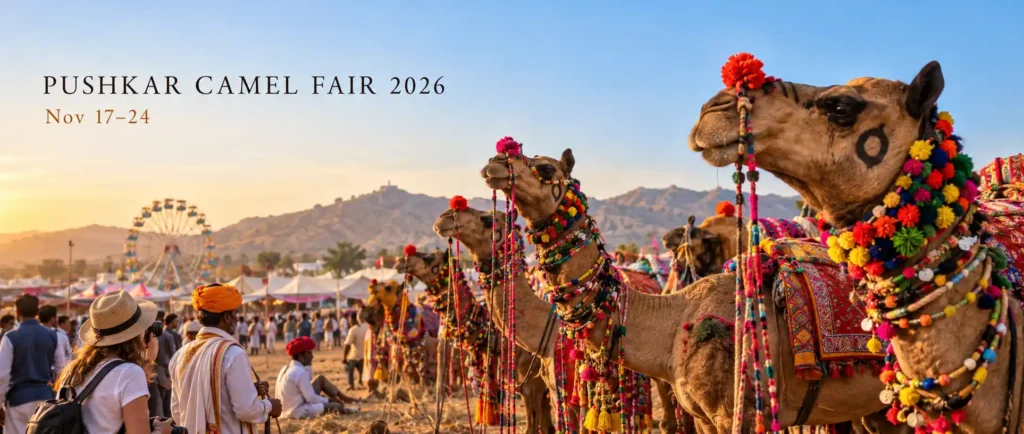
Pushkar Camel Fair 2026: Complete Travel Guide for International Visitors
If you have seen photographs of Pushkar during camel fair season, you may already have an idea of what to…
Read Article
Delhi, Agra and Jaipur can be visited throughout the year, but the experience changes considerably from one season to the next.
For most travelers, late October through November and February through early March offer the best balance of comfortable sightseeing weather and manageable conditions. December and January are cooler, but morning fog can affect visibility and travel. April through June brings intense heat, while July through September is the monsoon period.
The right month ultimately depends on what matters most to you: comfortable sightseeing, festivals, fewer crowds, lower costs, or simply fitting India into your vacation schedule.
This guide breaks down the Golden Triangle month by month so you can choose your travel dates with a clearer idea of what to expect.
For a first trip to Delhi, Agra and Jaipur, October through March is generally the easiest period for sightseeing.
Delhi Tourism also identifies October through March as its best visiting period. Delhi’s official seasonal guidance describes February and March as sunny and pleasant, April through June as hot, July through mid-September as wet and humid, and late September through November as pleasant.
If you want the simplest answer:
There is no single perfect month for everyone. A traveler who wants to photograph the Taj Mahal at sunrise may make a different choice from someone who wants to experience Holi or spend as little as possible.
| Month | General conditions | What it means for your trip |
|---|---|---|
| January | Cool mornings, pleasant afternoons; possible fog | Good sightseeing weather, but build flexibility into early mornings |
| February | Mild to warm, generally comfortable | One of the strongest months for the complete circuit |
| March | Warm, with temperatures rising later in the month | Good choice, especially earlier in March |
| April | Hot and increasingly dry | Sightseeing is possible, but start early |
| May | Very hot | Challenging for long outdoor visits |
| June | Very hot, with pre-monsoon conditions | One of the toughest months for daytime sightseeing |
| July | Hot, humid and rainy | Possible, but expect weather interruptions |
| August | Humid with monsoon rain | Better for flexible travelers than tightly scheduled itineraries |
| September | Monsoon begins to ease | A useful shoulder-season option |
| October | Weather improves, especially later in the month | Strong month for returning to outdoor sightseeing |
| November | Pleasant to warm; Delhi air quality can matter | Excellent weather, with an important Delhi caveat |
| December | Cool mornings and evenings | Comfortable sightseeing, but fog can affect travel |
The temperature picture also varies by city. Official Incredible India climate information shows Jaipur moving from roughly 3.5–27.6°C in January to 21.5–44.8°C in May, while December is around 5.4–29.0°C.
That difference is important when planning a multi-city trip. A day that feels comfortable in the morning can still become quite warm by the afternoon.
January is a good month for travelers who prefer cooler sightseeing weather and do not mind cold mornings.
Delhi can be quite cool in the morning, while Jaipur and Agra can also feel chilly around sunrise. Afternoon sightseeing is usually much more comfortable than early-morning travel.
The bigger issue is fog.
Fog can reduce visibility and occasionally affect road, rail and air travel in northern India. If seeing the Taj Mahal at sunrise is a major reason for your trip, leave some flexibility in your Agra schedule rather than building the entire itinerary around a single early-morning departure.
Best for: Cool-weather travelers, winter vacations and festival trips.
Watch for: Fog, particularly during early mornings.
February is one of the easiest months to recommend for a first Golden Triangle trip.
The weather is generally comfortable enough for long sightseeing days without the intense heat that arrives later in spring. You can spend time outdoors at the Taj Mahal, Agra Fort and Jaipur’s historic attractions without constantly planning around extreme temperatures.
February is also a strong month for travelers interested in cultural events. The Jaipur Literature Festival is scheduled for February 1–5, 2027, and Taj Mahotsav in Agra is listed for February 2027.
Best for: First-time visitors, sightseeing, photography and cultural events.
Watch for: Popular dates can be busier, so book key arrangements ahead of time.
March starts well for many travelers, but the difference between early and late March can be noticeable.
Temperatures begin climbing, particularly in Jaipur and Agra. Early March can still feel quite comfortable for sightseeing, while later March starts moving toward warmer conditions.
March is particularly interesting if you want to combine sightseeing with Holi-related celebrations. Rajasthan Tourism’s 2027 calendar lists Braj Holi for March 17–18, Rajasthan Festival for March 17–19, and Dhulandi Festival for March 22.
If you are planning around a festival, check the latest official calendar before booking flights and hotels.
Best for: Festivals, culture and travelers who prefer warmer weather.
Watch for: Increasing daytime heat later in the month.
April is when the heat becomes a much bigger part of the travel equation.
Delhi Tourism classifies April through June as summer, with average temperatures rising substantially compared with the winter and spring months.
You can still visit the Golden Triangle in April, but the way you plan your day matters more.
An early start can make a major difference. Try to handle outdoor monuments and fort visits earlier in the day, then use the hotter afternoon period for lunch, rest, shopping or indoor attractions.
Best for: Travelers with limited scheduling options and those comfortable with heat.
Watch for: Hot afternoons and strong sun.
May is one of the hardest months for a traditional Golden Triangle sightseeing itinerary.
Jaipur’s official climate information shows average monthly ranges reaching about 21.5–44.8°C in May.
That does not mean every day reaches the upper end of the range, but it illustrates why May requires a different approach.
Walking through large forts, palace complexes and open courtyards in the afternoon can become tiring quickly. A packed sightseeing schedule that looks fine on paper may feel very different once you are actually outside.
If May is your only available month, consider:
Best for: Travelers who cannot change their dates.
Watch for: Extreme daytime heat.
June continues the summer heat and can be particularly demanding for travelers who are not used to high temperatures.
Delhi’s official seasonal information places June within the hot summer period, with average temperatures that can reach the upper end of the seasonal range.
June can work if you plan around the weather rather than trying to ignore it.
A private vehicle can also make the experience more comfortable because you can move between attractions without spending as much time exposed to the heat.
Best for: Travelers with fixed vacation dates and strong heat tolerance.
Watch for: Very hot afternoons and dehydration.
July marks the monsoon period across much of northern India.
Delhi Tourism describes July through mid-September as wet, hot and humid.
Rain does not necessarily mean that your entire trip will be a washout. Some days may have shorter rain periods, while others can be wetter. The bigger issue is unpredictability.
If you travel in July, avoid building an itinerary where every hour depends on perfect weather.
Best for: Flexible travelers, longer trips and those comfortable with humid conditions.
Watch for: Rain, humidity and changes to outdoor plans.
August has much the same basic challenge as July: humidity, rain and changing conditions.
The upside is that travelers who are comfortable with monsoon weather can still see the major attractions without waiting for the traditional winter season.
This is a month where itinerary design matters. Give yourself enough time between cities and avoid making every sightseeing activity dependent on a specific weather window.
Best for: Flexible travelers who do not mind rain.
Watch for: Humidity, wet roads and changes to outdoor sightseeing.
September sits between the wetter monsoon period and the more comfortable autumn season.
Conditions can vary, so it is not as predictable as November or February. However, travelers who want to avoid the peak winter period may find September worth considering.
Toward the end of the month, conditions generally begin moving toward the more comfortable autumn pattern.
Best for: Shoulder-season travelers and people with flexible dates.
Watch for: Remaining monsoon humidity and rain.
October is an important turning point.
The intense summer heat has eased, and the Golden Triangle becomes much more comfortable for outdoor sightseeing. For many travelers, the second half of October is more attractive than the beginning of the month.
October can also be a good time for cultural travel and festivals. However, festival dates and major holiday periods can affect hotel demand and local traffic.
Best for: Travelers looking for improving weather and the beginning of the main sightseeing season.
Watch for: Hotter conditions early in the month and increased demand around major festivals.
November is one of the strongest months for a Golden Triangle itinerary.
Temperatures are generally much more comfortable than during summer, making long sightseeing days easier. Delhi, Agra and Jaipur all work well together during this period.
There is one important qualification: Delhi’s air quality can become a concern during parts of the post-monsoon and winter period.
That does not mean you should automatically avoid November. It simply means that air quality should be part of your decision if you are particularly sensitive to pollution.
So don’t choose November based on temperature alone.
Best for: Comfortable sightseeing, photography and first-time visitors.
Watch for: Delhi air quality during severe pollution episodes.
December is popular for good reason.
The weather is much more comfortable than the summer months, and daytime sightseeing can be very pleasant. The trade-off is that mornings and evenings can feel surprisingly cold, especially for travelers coming from warmer climates.
Fog can also affect northern India during the winter period.
Pack layers rather than assuming India will be warm simply because it is winter in the United States, UK, Canada or parts of Europe.
Best for: Winter vacations and comfortable daytime sightseeing.
Watch for: Cold mornings, fog and occasional travel delays.
| Your priority | Best period | Why |
|---|---|---|
| Best overall balance | Late Oct–Nov, Feb–early Mar | Comfortable sightseeing conditions |
| Cool weather | Dec–Feb | Cooler temperatures and pleasant daytime conditions |
| Festivals | Feb–Mar, Oct–Nov | Several major cultural events occur during these periods |
| Avoiding extreme heat | Oct–Mar | Easier for outdoor sightseeing |
| Photography | Feb–Mar, Oct–Nov | Generally comfortable conditions for long days outdoors |
| Lower-season flexibility | Jul–Sep | Monsoon can reduce demand, but weather is less predictable |
| Avoiding rain | Oct–June | Monsoon is mainly Jul–Sep |
| First-time visit | February | Strong combination of weather and sightseeing conditions |
Delhi is generally easiest to visit between October and March. The city has a pronounced summer and winter pattern, with April through June becoming hot and July through mid-September bringing humid monsoon conditions.
For travelers spending additional time in the capital, our Delhi sightseeing tours provide another option for exploring the city beyond the standard Golden Triangle itinerary.
Agra is particularly comfortable during February through April and September through November. The Taj Mahal and Agra Fort involve substantial outdoor walking, so extreme summer heat can make the experience harder.
If the Taj Mahal is the main reason for extending your Agra visit, you can also explore our Agra tour options for same-day and longer visits.
Jaipur works especially well from October through March. Official climate information shows a large temperature difference between the winter months and the May-June summer period.
Our Jaipur sightseeing tours can be useful if you want to spend additional time exploring the Pink City rather than treating Jaipur as only one stop on the circuit.
For a combined Delhi-Agra-Jaipur trip, the best approach is to choose a month that works reasonably well across all three cities rather than optimizing for only one.
For many travelers, yes.
Winter offers the most comfortable conditions for walking through forts, palaces, markets and historic districts. You are less likely to spend the day thinking about how to escape the heat.
But winter is not completely predictable.
December and January can bring cold mornings and fog. If your itinerary includes early trains, sunrise sightseeing or tight connections, leave some room for delays.
February is often a particularly good compromise because the weather starts becoming more comfortable while the worst winter conditions are behind you.
The hardest period for most first-time visitors is May through June, mainly because of the heat.
July and August can also be challenging, but for a different reason: rain and humidity.
That does not make these months impossible. It simply means your itinerary needs to be built around the conditions.
A traveler who understands the weather and plans accordingly can still have a good trip. The mistake is treating a May itinerary exactly like a February itinerary.
Pack:
Pack:
Pack:
The goal is not to overpack. Your clothing should match the conditions you are actually likely to encounter.
Travelers coming from different climates may experience the same Indian weather very differently.
If you are escaping a North American winter, February may feel pleasantly warm during the day. December and January can still feel cold in the mornings, so do not pack exclusively for warm weather.
November through March is generally a comfortable period for sightseeing, particularly if you prefer to avoid intense heat. Layering is useful in December and January.
Travelers arriving from Australia’s warmer months may find India’s winter comfortable rather than cold during the daytime, although early mornings can still require a jacket.
February and March can be particularly attractive for European visitors looking for comfortable sightseeing weather without the extreme heat of the Indian summer.
Regardless of where you are coming from, your personal tolerance for heat and cold matters. Someone who dislikes heat should prioritize the cooler months even if another traveler considers April manageable.
If festivals are part of your reason for visiting India, your travel month may be worth choosing around the event rather than the weather alone.
Some notable 2027 dates currently published by Rajasthan Tourism include:
| Event | 2027 date | Location |
|---|---|---|
| Bikaner Camel Festival | Jan 9–10 | Bikaner |
| Kite Festival | Jan 14 | Jaipur/Rajasthan |
| Jaipur Literature Festival | Feb 1–5 | Jaipur |
| Braj Holi | Mar 17–18 | Bharatpur region |
| Rajasthan Festival | Mar 17–19 | Jaipur/Rajasthan |
| Dhulandi Festival | Mar 22 | Jaipur |
| Gangaur Festival | Apr 9–10 | Jaipur |
| Mewar Festival | Apr 9–11 | Udaipur |
| Taj Mahotsav | February 2027 | Agra |
Rajasthan Tourism currently lists these 2027 festival dates, while Incredible India lists Taj Mahotsav for February 2027.
Important: Festival dates can vary according to the official festival calendar, local announcements, and religious or lunar calendars. Always confirm the latest official dates before booking flights, hotels or a tour around a specific festival.
If your main purpose is to experience Holi, for example, do not book based only on a general “March” recommendation. The exact dates matter.
If you dislike hot weather, focus on October through March.
If festivals are important, compare the official dates before choosing your travel window.
If you want long days walking around forts and historic areas, cooler months are easier.
If you prefer a slower pace with plenty of hotel time, you have more flexibility.
December and January can bring fog. July through September can bring rain. May and June bring serious heat.
Every season has a trade-off.
A month can have very different conditions from beginning to end.
Early March is not necessarily the same as late March. Early October is not necessarily the same as late October.
That small distinction can make a noticeable difference to a short five- or six-day itinerary.
It can.
Hotel demand, availability and transportation requirements can change depending on the season. The most popular sightseeing months may also require more advance planning.
If your dates are flexible, compare a few travel windows rather than assuming that one month will always be cheaper.
The important point is to compare the total trip value, not just the advertised tour price.
A lower-priced package is not necessarily a better deal if it uses a less convenient hotel location, excludes important services or gives you a rushed itinerary.
For a broader look at trip budgeting, see our Golden Triangle tour cost guide and compare the cost of different travel styles before choosing your dates.
If you want the easiest answer, plan your Golden Triangle trip for late October through November or February through early March.
These periods offer a strong balance between sightseeing weather and overall travel conditions.
Choose December or January if cooler weather does not bother you and you are prepared for cold mornings and possible fog.
Choose April through June only if your schedule requires it or you are comfortable planning around significant heat.
Choose July through September if you are flexible about rain and want to travel outside the traditional high season.
And if a festival is the reason you are visiting, work backward from the official festival date, then check the weather for that period.
The best month is ultimately the one that fits your priorities—not simply the month with the highest rating on a weather chart.
Ready to plan your Delhi, Agra and Jaipur itinerary?
Start by choosing your travel month, preferred trip length and travel style. From there, you can decide whether a focused Golden Triangle itinerary is enough or whether you want to add another destination.
For travelers who want a shorter trip, compare our 3 Days Golden Triangle Tour, 4 Days Golden Triangle Tour, 5 Days Golden Triangle Tour and 6 Days Golden Triangle Tour options.
If you have more time, consider extending the journey with Ranthambore, Udaipur, Varanasi, Goa, or Ajmer and Pushkar.
The important thing is to choose the itinerary around your actual travel priorities rather than trying to fit every possible destination into one trip.
The weather information in this guide is based on published climate information and official tourism guidance for Delhi, Agra and Jaipur. Climate ranges describe typical conditions rather than a forecast for your exact travel dates. Festival dates can also change according to official calendars, local announcements and religious or lunar calendars, so confirm the latest information before booking.
Quick answers related to this article.
February is one of the strongest all-around choices for a first Golden Triangle trip. It generally offers comfortable sightseeing conditions across Delhi, Agra and Jaipur without the extreme heat of late spring and summer.
Yes. December is a popular month because daytime conditions are generally comfortable. However, mornings can be cold and fog can sometimes affect visibility and transportation.
No. January is manageable for most travelers, but mornings can be cold and fog is an important consideration. Pack layers and avoid making tight early-morning connections where possible.
Yes, particularly during the first part of the month. Temperatures rise as March progresses, but the month can also be attractive for travelers interested in Holi and other cultural events.
May is one of the most challenging months because of the heat. If you must travel then, build the itinerary around early-morning sightseeing, air-conditioned transportation and longer afternoon breaks.
The main monsoon period is generally July through September. Delhi Tourism describes July through mid-September as wet, hot and humid.
23Sep
If you have seen photographs of Pushkar during camel fair season, you may already have an idea of what to…
Read Article 21Sep
21Sep
Planning a Golden Triangle trip and wondering whether you need 5, 7 or 10 days?The short answer is: 5 days…
Read Article 07Sep
07Sep
Golden Triangle India for First-Time Visitors: What Nobody Tells You Before You Go Planning your first trip to India can…
Read Article