 23Sep
23Sep
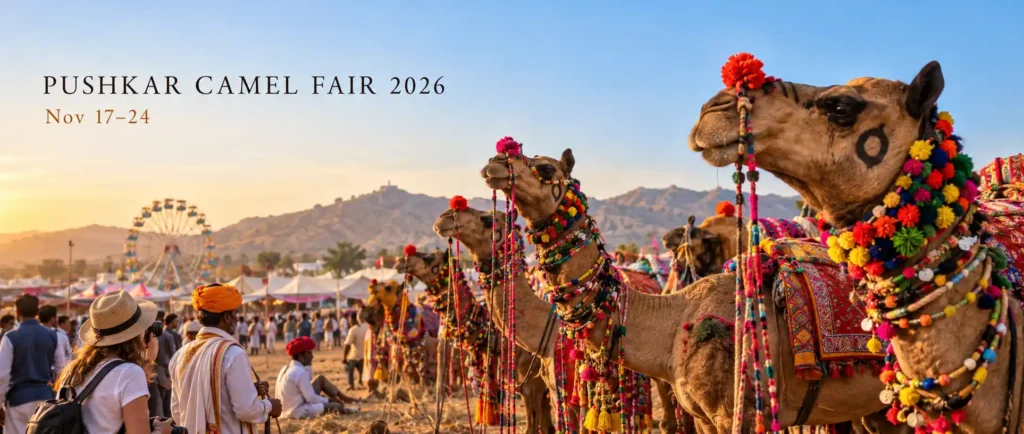
Pushkar Camel Fair 2026: Complete Travel Guide for International Visitors
If you have seen photographs of Pushkar during camel fair season, you may already have an idea of what to…
Read Article
Planning your first trip to India can feel overwhelming. There are so many places to choose from, and the distances on a map don’t always tell you what the journey will actually feel like.
For many first-time visitors, the Golden Triangle of India – Delhi, Agra and Jaipur is one of the most practical ways to experience northern India in a single trip. You get historic monuments, Mughal and Rajput architecture, markets, food, busy city life and very different local atmospheres without trying to cover half the country.
But there are a few things most Golden Triangle itineraries don’t tell you.
Traffic can change your plans. A sightseeing day can involve much more walking than expected. The Taj Mahal is worth planning your morning around. Shopping can take longer than you think. And trying to squeeze every possible attraction into seven days can leave you remembering the schedule more than the experience.
This guide focuses on those realities.
If this is your first time in India, the goal isn’t to make your itinerary perfect. It’s to make it realistic enough that you can actually enjoy it.
The Golden Triangle is the classic tourist circuit connecting Delhi, Agra and Jaipur in northern India.
The route is popular because each destination offers something different.
| City | What first-time visitors usually come for | What makes it different |
|---|---|---|
| Delhi | Historic monuments, markets, food and city experiences | A huge capital where old and modern India exist side by side |
| Agra | Taj Mahal and Mughal heritage | Home to some of India’s best-known Mughal monuments |
| Jaipur | Forts, palaces, markets and Rajasthan culture | A strong introduction to Rajasthan’s royal architecture and traditions |
India’s official tourism portal also presents Delhi, Agra and Jaipur as a connected Golden Triangle itinerary, with a five-day route covering major attractions across the three cities.
The circuit is popular for another reason: it gives first-time travelers a defined route. You don’t have to figure out how to connect ten different destinations across India at once.
Yes. For many travelers, the Golden Triangle is one of the easiest ways to get a meaningful introduction to India without building an enormous itinerary.
You can experience major historical sites, different architectural traditions, local markets, regional food and everyday city life within one journey.
The important part is understanding what “easy” actually means.
The Golden Triangle is easier to plan than a much larger India itinerary. It isn’t necessarily slow-paced or predictable.
A first trip works better when you leave room for:
A perfectly packed itinerary may look impressive before the trip. A flexible itinerary is usually more enjoyable once you’re actually there.
Delhi, Agra and Jaipur are close enough geographically to look simple to connect.
That doesn’t mean every transfer will feel quick.
Your actual journey can be affected by traffic, road conditions, city congestion, departure time, stops, hotel location and how much you want to do after arriving.
Think about a transfer day this way:
Departure routine + travel time + possible traffic + arrival + hotel check-in + sightseeing.
That’s very different from simply looking at a driving time on a map.
If you have an international flight, train, timed attraction or important dinner reservation, build a reasonable buffer around it.
Don’t make your entire day depend on every vehicle movement happening exactly as planned.
For many first-time visitors, Delhi is where India first feels intense.
There is a lot happening at once: traffic, pedestrians, markets, street vendors, monuments, modern neighborhoods, old streets and constant movement.
That doesn’t mean Delhi is unpleasant. Its energy is part of what makes the city memorable.
But don’t judge your entire India trip by your first few hours.
If you’ve just arrived after a long international flight, you may be tired, disoriented and dealing with jet lag. A quiet evening at your hotel can be a much better choice than immediately trying to visit five attractions.
For your arrival day:
You don’t have to understand Delhi on day one.
For a deeper look at the city before you travel, see the Delhi tours and sightseeing guide.
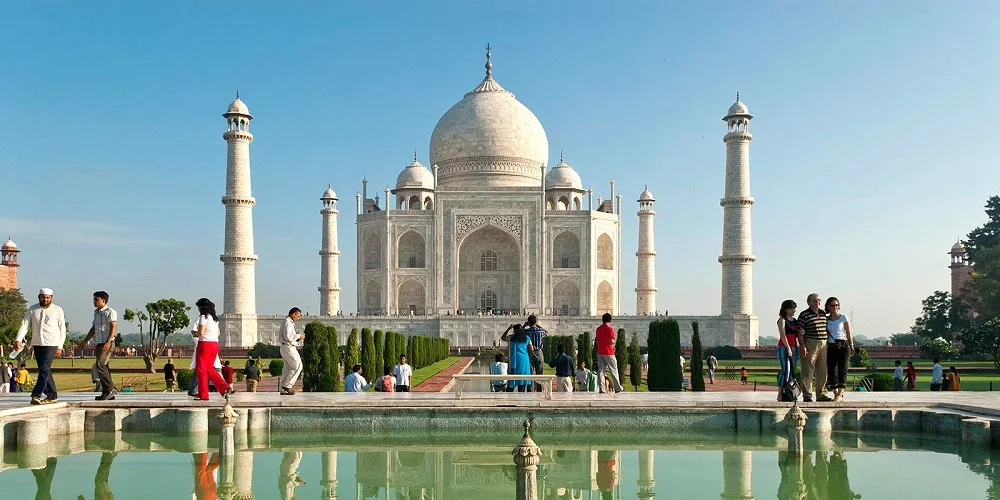
The Taj Mahal is the obvious centerpiece of an Agra visit-and there is a reason it is.
The Taj Mahal is a UNESCO World Heritage Site. UNESCO describes it as an outstanding architectural and artistic achievement, and records construction beginning in 1632, with the principal structure completed in 1648.
If seeing the Taj Mahal is one of the main reasons you’re visiting India, don’t treat it as something you can simply squeeze into whichever spare hour appears in your schedule.
An early visit can be particularly useful when you want to avoid the strongest heat later in the day and make the most of your time in Agra.
And yes, getting up early on vacation isn’t always appealing.
This is one of those times when it can be worth it.
Planning tip: Check the official attraction rules, opening days, ticket arrangements and entry requirements close to your travel date. These details can change.
If the Taj Mahal is a major priority, our Agra tours and Taj Mahal travel guide provides additional planning information.
A common first-time itinerary looks something like this:
Arrive → Taj Mahal → take photos → leave Agra.
That works if you’re genuinely short on time, but it misses an important part of the city.
Agra Fort is another major Mughal landmark and UNESCO World Heritage Site. The complex contains palaces, audience halls, mosques and other historic structures.
Depending on your interests and available time, you can also explore Agra’s other heritage, craft and food experiences.
The larger point is simple:
Don’t reduce Agra to one monument.
The Taj Mahal may be the reason you come, but Agra’s Mughal history is much broader.
By the time you reach Jaipur, the character of the trip changes again.
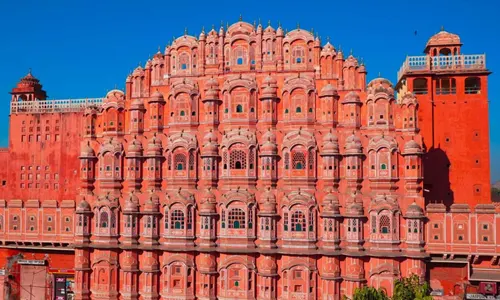
The city is known for attractions such as Amber Fort, Hawa Mahal, City Palace and Jantar Mantar.
Jantar Mantar is particularly interesting if you enjoy unusual historical sites. UNESCO describes it as an early-18th-century astronomical observation site containing a collection of major fixed instruments.
But Jaipur isn’t only about ticking monuments off a list.
Leave some time for:
That’s when Jaipur can start to feel less like a collection of tourist attractions and more like a living city.
For practical destination planning, see the Jaipur tours and sightseeing guide.
This is one of the easiest itinerary mistakes to make.
A map may show a reasonable driving time. Your itinerary then assumes you’ll arrive, park, walk in, visit the attraction and leave exactly on schedule.
Real travel rarely works that neatly.
One delay can move everything else later.
If something is time-sensitive, build a buffer.
For example, don’t schedule a major sightseeing stop immediately before an important flight simply because the estimated driving time looks comfortable.
A Golden Triangle itinerary should have breathing room.
That doesn’t mean wasting time. It means protecting the parts of your trip that matter most.
A sightseeing itinerary can make a day look deceptively easy:
Breakfast → monument → lunch → fort → hotel.
What the itinerary doesn’t show is the walking between parking areas, entrances, courtyards, galleries, viewpoints, markets and different sections of a monument.
By late afternoon, your feet may have a different opinion about the schedule.
Comfortable walking shoes are therefore more useful than packing another pair of shoes you may barely wear.
If you’re traveling with older family members or anyone with mobility concerns, discuss the walking requirements before the trip. It is much easier to design a comfortable itinerary in advance than to change everything after arrival.
If you’re nervous about Indian food, you don’t have to arrive assuming every meal will be painfully hot.
Indian cuisine is much more varied than that.
You can try familiar dishes, vegetarian meals, breads, rice dishes, grilled foods, mild curries and regional specialties while gradually working your way toward stronger flavors.
If you’re not used to spicy food, simply tell your restaurant or guide that you’d prefer something mild.
A good approach is to experiment without trying to prove anything.
You don’t have to order the hottest dish on the menu on your first night.
Food and water hygiene deserve some attention when you’re traveling in India.
The CDC advises travelers to make careful food and drink choices and avoid contaminated water. It also recommends planning for heat, sun exposure and other travel-health considerations.
For a practical approach:
You don’t need to be afraid of eating in India.
You simply need to pay attention.
If you’re visiting busy tourist areas, you may encounter people offering souvenirs, tours, transportation, photographs or other services.
Some interactions will be perfectly friendly. Others may become persistent.
The easiest response is usually a polite but clear “No, thank you” and continuing on your way.
Don’t feel obligated to buy something because someone has started a conversation with you.
If you are interested in shopping, decide beforehand what you actually want to buy and how much time you’re willing to spend.
Shopping is part of the Golden Triangle experience for many travelers, particularly in Jaipur and Agra.
But shopping can also quietly turn a sightseeing afternoon into a much longer stop than expected.
If you enjoy browsing, leave room for it.
If shopping isn’t a priority, tell your guide or driver clearly.
A useful question to ask before stopping somewhere is: “Is this part of the itinerary because I asked for it, or because it’s convenient to add?”
Your itinerary should reflect your interests.
Weather should obviously influence what you pack, but clothing also matters when visiting religious and heritage sites.
Comfortable, breathable clothing is useful, especially during warmer periods. More modest clothing may be appropriate at some religious sites.
A lightweight layer can also be useful when you want additional coverage.
The simplest rule is: Dress for the temperature, but also respect the setting you’re visiting.
For a first Golden Triangle trip, self-driving is rarely the option I’d prioritize.
The challenge isn’t simply operating a vehicle. You’re also dealing with unfamiliar roads, traffic patterns, navigation, parking and the mental workload of moving between cities.
A private car with a professional driver can make the journey considerably easier.
That doesn’t mean you need a luxury vehicle or an expensive tour.
It simply means you can spend your attention on the destination rather than constantly watching the road.
For travelers who value flexibility, a private Golden Triangle tour can also make it easier to adjust sightseeing times and spend longer at places they enjoy.
A beautiful hotel isn’t necessarily the best hotel for your itinerary if getting to the places you want to visit adds unnecessary travel every day.
When comparing hotels, look beyond the room itself.
Consider:
For a busy multi-city trip, convenience can be more valuable than a hotel feature you’ll barely use.
This may be the most useful planning advice in the entire article.
First-time visitors often build a “perfect” itinerary containing every monument, market and experience they can find.
Then one delayed departure or long lunch throws the whole day off.
Leave gaps.
Those gaps give you somewhere to put:
A little empty space is not wasted time. It is what makes an itinerary resilient.
Once you start researching India, the list grows quickly.
Varanasi. Udaipur. Mumbai. Kerala. Goa. Ranthambore. Himachal Pradesh.
The temptation is to add another flight or overnight journey because you’re already in India.
Resist that temptation if it makes your trip rushed.
The Golden Triangle can be a complete trip in itself.
You don’t have to prove that you’ve seen enough of India by adding five more destinations.
If you enjoy the country, there can always be a second trip.
Visa requirements depend on your nationality and the purpose of your visit, so don’t rely on an old travel blog or an unofficial visa website.
The Government of India’s official visa portal provides information about visa and eVisa processes. It also provides information about India’s e-Arrival Card, which is arrival information rather than a visa.
Before leaving home:
For current requirements, use the official Government of India visa portal rather than relying on information published for a previous travel season.
Nobody plans a vacation expecting something to go wrong.
But flights can be delayed, luggage can disappear, plans can change and unexpected medical expenses can occur.
Before buying a policy, check what it actually covers.
Look at:
The cheapest policy isn’t necessarily the best value if it doesn’t cover the situations you are most concerned about.
There isn’t one perfect month for every traveler.
Your decision should take into account:
More importantly, time of day can sometimes matter almost as much as the season.
An early monument visit during a hot period can feel very different from visiting the same place in the afternoon.
That’s why a good Golden Triangle itinerary considers both the month and the daily schedule.
For package options designed around different trip lengths and travel styles, see the Golden Triangle tour packages.
You may hear the Golden Triangle described as an easy introduction to India.
That’s fair-but don’t interpret it as a sanitized version of the country.
You will still encounter crowded streets, busy markets, different social customs, strong smells, traffic, religious traditions, unexpected conversations and a pace of life that may feel very different from home.
That’s part of the experience.
The advantage of the Golden Triangle is that the route gives first-time visitors a relatively manageable framework for experiencing all of this.
You have a defined route without having to figure out the entire country at once.
| What you may expect | What actually requires planning |
|---|---|
| “The cities are close together.” | Transfer times can change with traffic and the day’s schedule. |
| “I’ll see the Taj Mahal and be done with Agra.” | Agra has significant Mughal heritage beyond the Taj Mahal. |
| “I’ll visit lots of attractions every day.” | Too many attractions can make the trip exhausting. |
| “The itinerary says three hours, so we’ll arrive in three hours.” | Road travel needs a reasonable buffer. |
| “India will be one consistent experience.” | Delhi, Agra and Jaipur feel noticeably different. |
| “I’ll decide everything after I arrive.” | Visa, hotels and key transportation decisions are easier to handle early. |
| “A seven-day trip means seven full sightseeing days.” | Arrival, departure, transfers and rest all use part of the trip. |
| “More attractions means a better trip.” | A manageable pace often produces a better experience. |
Five days is possible. Six or seven days is more comfortable for many first-time visitors.
The right choice depends on how quickly you like to travel.
Five days can cover the major highlights of Delhi, Agra and Jaipur, but the schedule will be tighter.
This works well for travelers who:
If you’re considering this timeframe, see the 5 Days Golden Triangle Tour for an example of how the circuit can be structured.
An extra day or two gives you more breathing room.
You can slow down the itinerary, allow more time in Delhi or Jaipur, include additional experiences, or simply have more flexibility when traffic or fatigue changes your plans.
For a first trip to India, six or seven days is often the more comfortable choice.
Seven days gives you enough room to see the major highlights without making every day feel like a race.
| Day | Suggested plan |
|---|---|
| Day 1 | Arrive in Delhi, transfer to hotel and rest |
| Day 2 | Explore major Delhi sights |
| Day 3 | Delhi → Agra; explore Agra Fort and other planned sights |
| Day 4 | Early Taj Mahal visit; continue toward Jaipur |
| Day 5 | Jaipur sightseeing, including major forts and palaces |
| Day 6 | Jaipur at a slower pace; markets, culture or additional experiences |
| Day 7 | Jaipur → Delhi or onward departure |
This is a framework rather than a rigid schedule.
The official Incredible India tourism itinerary demonstrates that the Golden Triangle can also be approached as a shorter five-day journey. A seven-day version simply gives you more room to absorb the destinations rather than moving from attraction to attraction.
For travelers who want to compare a shorter organized itinerary, the site’s Golden Triangle tour packages by duration provide several route options.
A private Golden Triangle tour can be particularly useful for first-time visitors who value convenience and flexibility.
You may benefit from private travel if you:
A private driver can also reduce the coordination involved in moving between Delhi, Agra and Jaipur.
That doesn’t mean everyone needs a private tour.
Independent travelers who are comfortable organizing transportation, hotels, tickets and daily sightseeing may prefer to plan the trip themselves.
The important thing is to choose the travel style that matches your comfort level-not simply the cheapest option.
There isn’t one meaningful “standard price” for a Golden Triangle tour.
Two seven-day itineraries can look similar on paper while having very different prices because of differences in:
Any package price, budget figure or example mentioned in a Golden Triangle guide should be treated as reference information only. It is not a guaranteed or necessarily current selling price.
Actual costs can vary according to travel dates, hotel availability, group size, season, transportation, inclusions and real-time operating conditions.
When comparing two tours, don’t ask only:
“Which one is cheaper?”
Also ask:
“What exactly am I getting for that price?”
A lower headline price may exclude services that another package includes.
Before booking, check:
The smartest comparison is the overall value of the trip, not simply the lowest advertised number.
You don’t need to pack your entire house for India. Focus on things you’ll actually use.
The CDC also recommends travelers consider appropriate clothing, sunscreen, basic first-aid supplies and other health-related items when preparing for India.
The right approach is neither to ignore safety nor to let fear dominate your trip.
Use normal travel precautions and check current official advice before departure.
For example:
For US travelers, the U.S. Department of State currently lists India at Level 2: Exercise Increased Caution, with risk indicators including crime and terrorism. Travel advice can change, so check the current advisory rather than relying on an old article.
The Department of State also provides specific guidance on scams and recommends travelers remain alert to common tourist scams and questionable offers.
For additional reading, you can also see the site’s India safety guide for first-time travelers from America.
The best Golden Triangle itinerary isn’t necessarily the one with the longest sightseeing list.
It’s the one that gives you enough time to enjoy the places you came to see.
See the Taj Mahal.
Walk through an old Delhi neighborhood.
Spend time inside Jaipur’s historic architecture.
Eat something you haven’t tried before.
Leave some room for a long lunch or an unexpected conversation.
And don’t panic when the day doesn’t unfold exactly as planned.
India has a way of making a perfectly organized itinerary a little less perfect.
That doesn’t necessarily make it a worse trip.
Sometimes those are the moments you remember.
If you’re planning your first visit, start with a realistic route, choose transportation and hotels carefully, and build the itinerary around the experiences that matter most to you.
If you’re comparing Golden Triangle tours, start with the details that will actually affect your experience: travel dates, number of travelers, preferred pace, hotel category, transportation and sightseeing priorities.
Explore the available Golden Triangle tour packages and compare itineraries based on what matters to you rather than choosing a package simply because it has the longest attraction list.
The goal isn’t simply to visit Delhi, Agra and Jaipur.
It’s to make your first experience of India enjoyable enough that you’ll want to come back.
Quick answers related to this article.
Five days is possible, while six to seven days is more comfortable for many first-time visitors. More time gives you greater flexibility for traffic, sightseeing, meals and rest.
Yes. It offers a manageable route through Delhi, Agra and Jaipur while introducing travelers to major monuments, markets, food, architecture and different regional experiences.
Many travelers visit the circuit, but normal travel precautions still matter. Keep valuables secure, use reputable transportation, be cautious with unsolicited offers and check current U.S. government travel advice before departure.
A private tour can be useful if you value flexibility, private transportation and convenience. It can also be particularly helpful for families, older travelers and visitors who don't want to coordinate every transfer themselves.
For many first-time Golden Triangle travelers, a private driver is a practical option. It removes much of the stress of unfamiliar roads, traffic, parking and intercity travel.
Yes, provided the itinerary is planned around comfort and mobility. Discuss walking requirements, hotel access, transportation, rest periods and sightseeing pace before booking.
Choose comfortable clothing appropriate for the season and the places you plan to visit. More modest clothing may be appropriate at religious and some heritage sites.
You can, but be selective. Look for busy stalls with high turnover, pay attention to food preparation and hygiene, and avoid food or water that appears questionable. If you're concerned about your stomach, start cautiously.
Yes. If the Taj Mahal is one of your main reasons for visiting India, it should be a priority. If time allows, combine it with Agra Fort so you experience more of Agra's Mughal heritage.
Yes, five days can cover the major highlights, but the schedule will be tighter. If you can extend the trip to six or seven days, the additional time can make the journey less rushed.
No. Tour costs can change according to travel dates, hotel availability, season, group size, transportation, inclusions and other operating conditions. Treat online prices as reference information and confirm the current package details before booking.
23Sep
If you have seen photographs of Pushkar during camel fair season, you may already have an idea of what to…
Read Article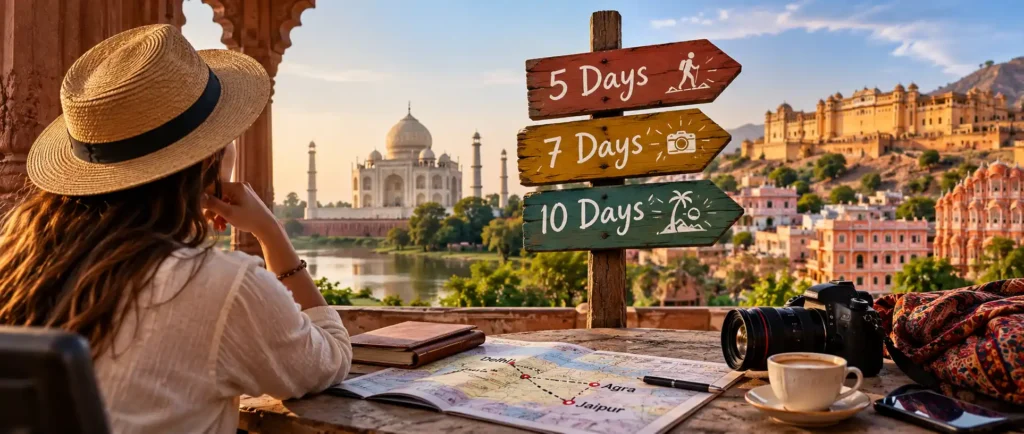 21Sep
21Sep
Planning a Golden Triangle trip and wondering whether you need 5, 7 or 10 days?The short answer is: 5 days…
Read Article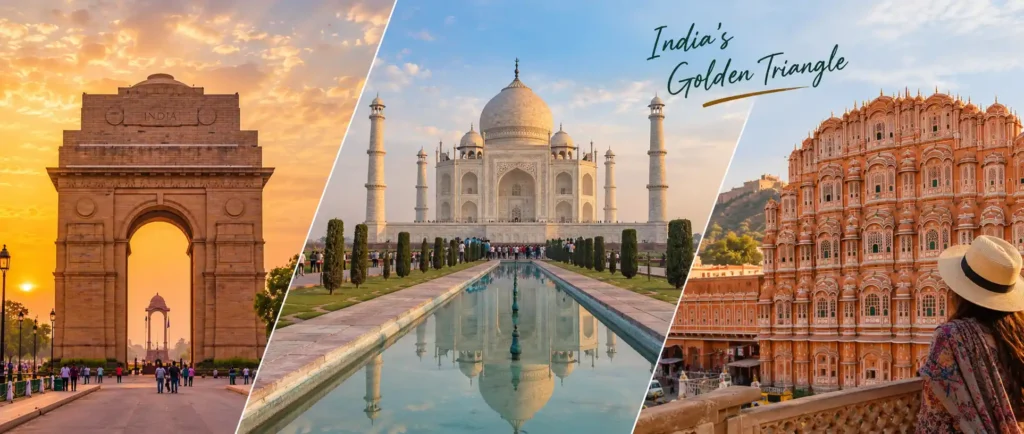 14Sep
14Sep
Delhi, Agra and Jaipur can be visited throughout the year, but the experience changes considerably from one season to the…
Read Article